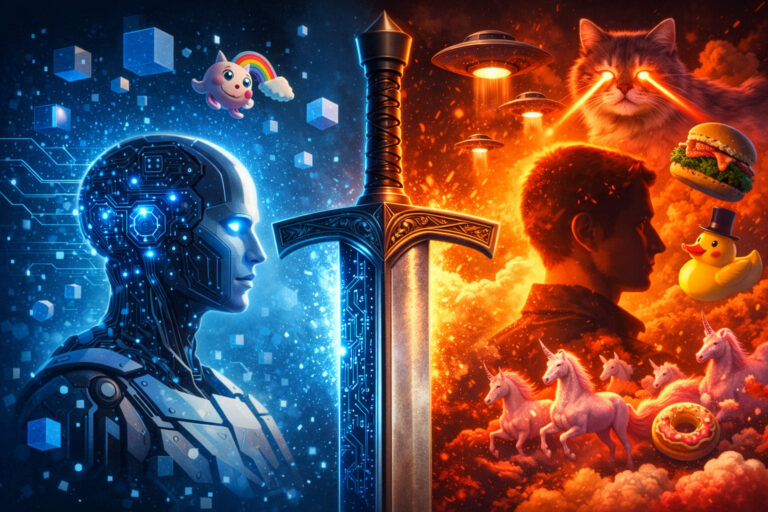
In our industry, marketing activity is at an all-time high on your screens and in your mailbox, but the difference between brands has diminished.
Have you opened your social feed lately? If social media isn’t something you enjoy, check the websites for local services. How many have the same layout? It isn’t obvious at first, but slick copy, polished visuals, and quick production are now rooted in new tech, specifically AI.
While AI may reduce costs up front, relying on it as the creator of content instead of a tool takes away from the human talent and creativity, the most valuable asset a company owns.
Why AI Output Looks Good Enough
Generated marketing materials look good on the surface because AI models don’t generate original concepts, feel emotions, or understand cultural nuances. They use millions of campaigns, articles, and designs created by human beings.
This creates the illusion of competence with a silent penalty: the generalization of brand voice. When every company in an industry uses the same baseline models trained on the same data pools, everyone begins to sound professional, helpful, and overall, unmemorable. What’s worse, because these systems are trained on scraped human work, brands face growing legal and ethical risks over intellectual property: from uncredited text to generated imagery and video. What looks like efficiency on the surface is often borrowed content.
The Hidden Balance Sheet: Calculating the Cost
-
Resource vs. Worker
AI fails when you treat it as a replacement for creative work. The goal is not to abandon technology, but to adapt and correct its position in our workflow. AI functions well as a resource, a digital shovel, or an advanced calculator. -
Where AI Thrives:
Use automation for the hard, high-volume mechanics of marketing. It is successful at analyzing large datasets, generating rough brainstorming, organizing outlines, summarizing research, and handling formatting. -
Where Humans Must Lead:
Strategic positioning, brand voice, high-stakes storytelling, emotional connection, and original concepts need to stay human. When humans remain hands-on with their strategy, AI can be used to clear away administrative issues; efficiency increases without sacrificing the core creative spark.
Reclaiming Authentic Marketing
Speed is an advantage, but originality is a strategic difference. In a market flooded with automated and derivative content, authentic human perspective has become more valuable, not less.
Take a hard look at your current marketing operations. Look for areas where automated tools are aiding your team, and identify where these tools might be hurting your brand’s unique voice. Tools evolve, but trust remains human. Master the technology, protect your voice, and keep the human touch at the center of your brand.